River Rouge by Yeni Mao, Museo Anahuacalli, September 19 2026 – January 3 2027
Frente al pasado de piedra y barro que resguarda la pirámide del Anahuacalli, Yeni Mao encuentra otra velocidad que no es la del progreso. Si durante el siglo XX el arte se fascinó por el desarrollo industrial, el movimiento obrero como un motor de la historia y el pasado como la búsqueda de una raíz nacional, Mao presenta una serie de obras que rescatan un imaginario mitológico en donde el cuerpo fragmentado es un sobreviviente del fallido mito del progreso.
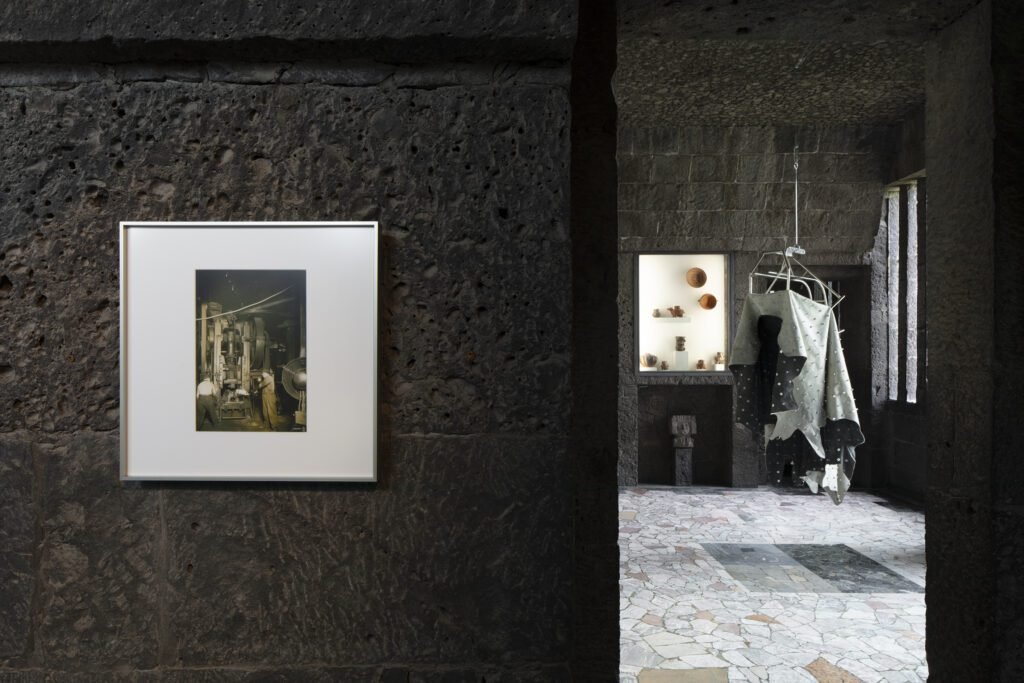
River Rouge toma su nombre de la capital de la industria automotriz de los EEUU, una ciudad donde Diego Rivera pintó la obra conocida como Murales de la Industria de Detroit, comisionados en los años treinta por la Ford Motor Company. Encargado de representar el esplendor de la fábrica de River Rouge, la obra de Rivera celebra la fuerza trabajadora y su potencial revolucionario, a la vez que presenta un sincretismo entre industria y mitología prehispánica, una crítica al progreso que Mao toma como detonante de su discurso.
Yeni Mao creció con la imagen de esos murales en una ciudad cuyo brillo se ha oscurecido tras sucesivas recesiones, conflictos obreros, raciales y sociales. Esta exhibición propone un diálogo entre el Anahuacalli y River Rouge para desenterrar los fósiles industriales del optimismo moderno. El tiempo entonces no avanza lineal, campante, hacia la utopía, sino que más bien es una superficie monstruosa.
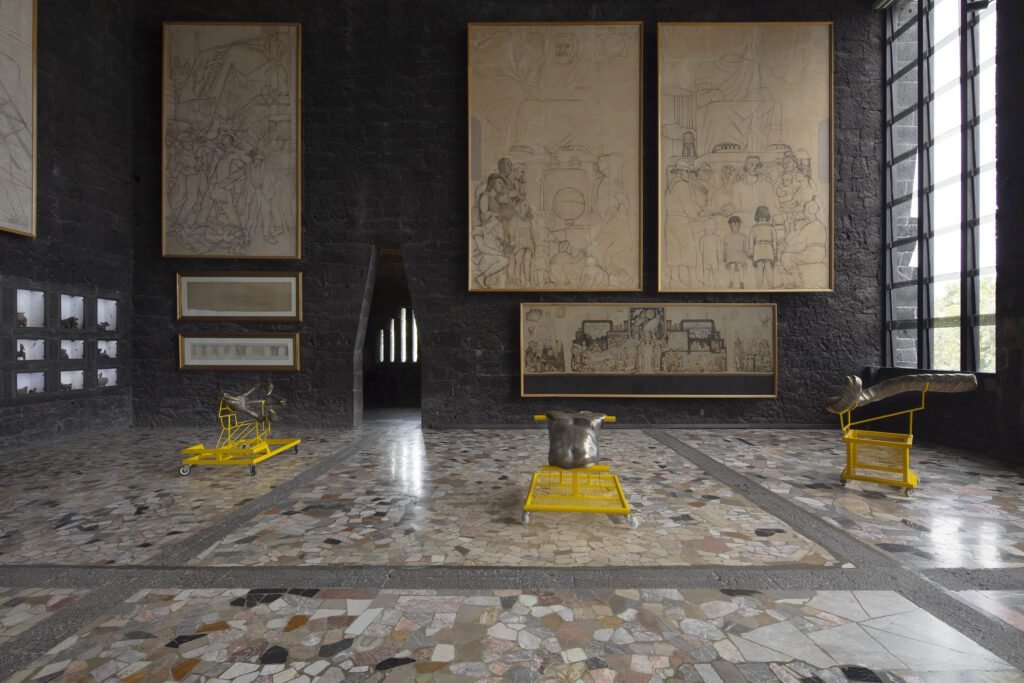
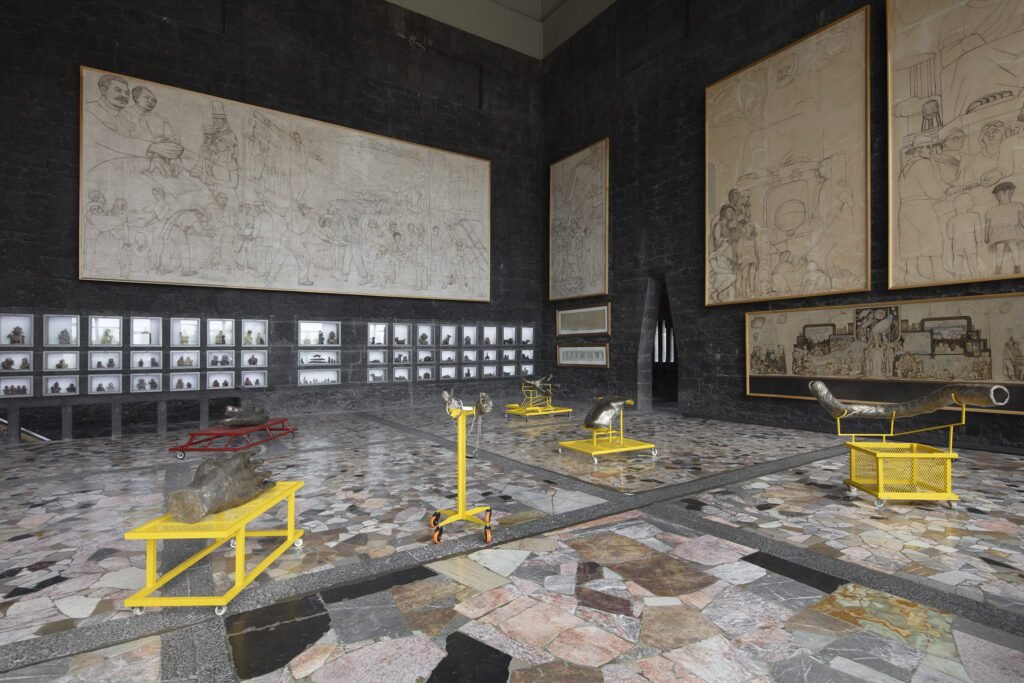
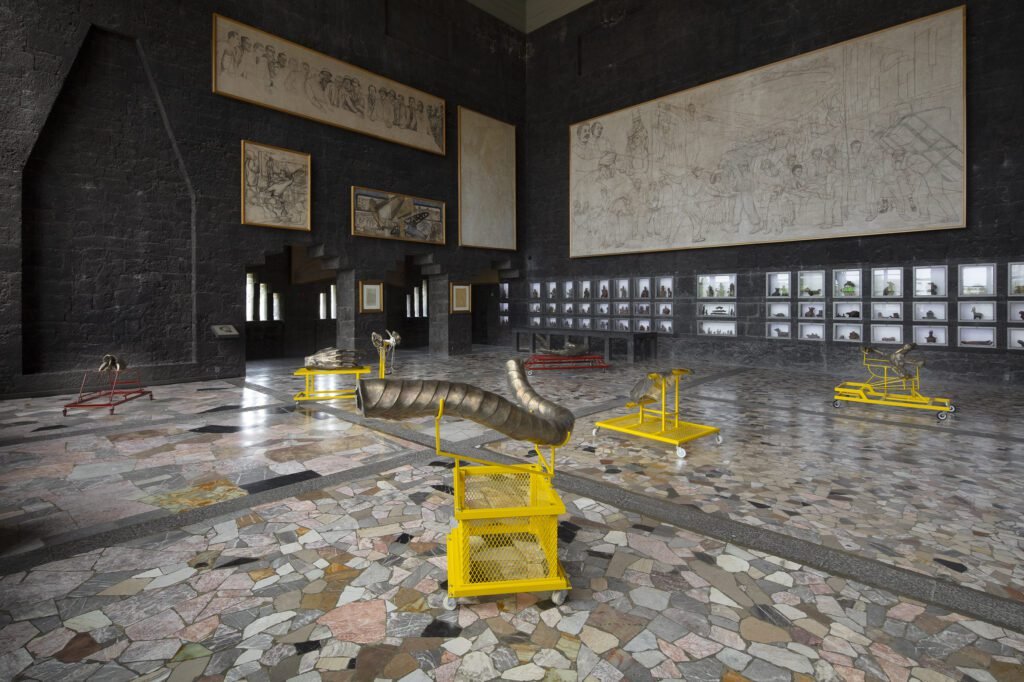
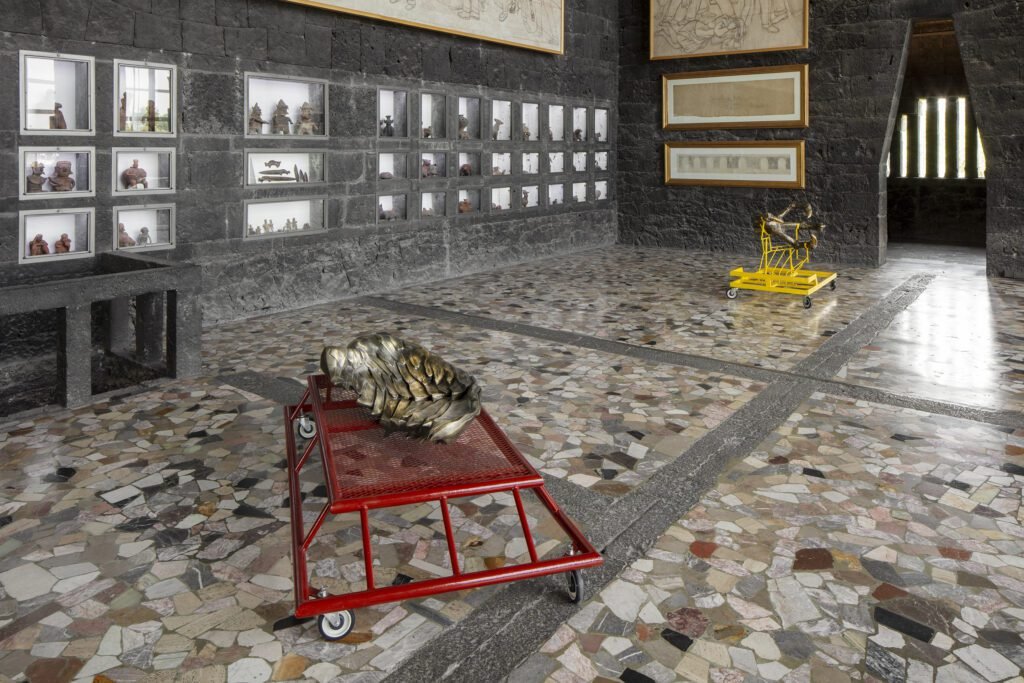
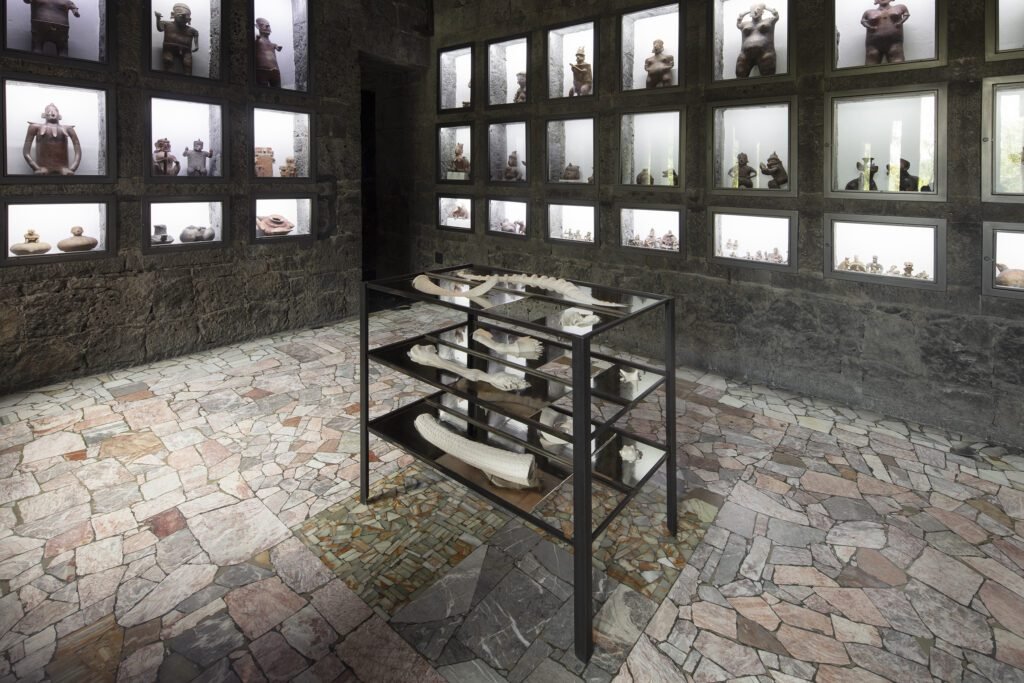
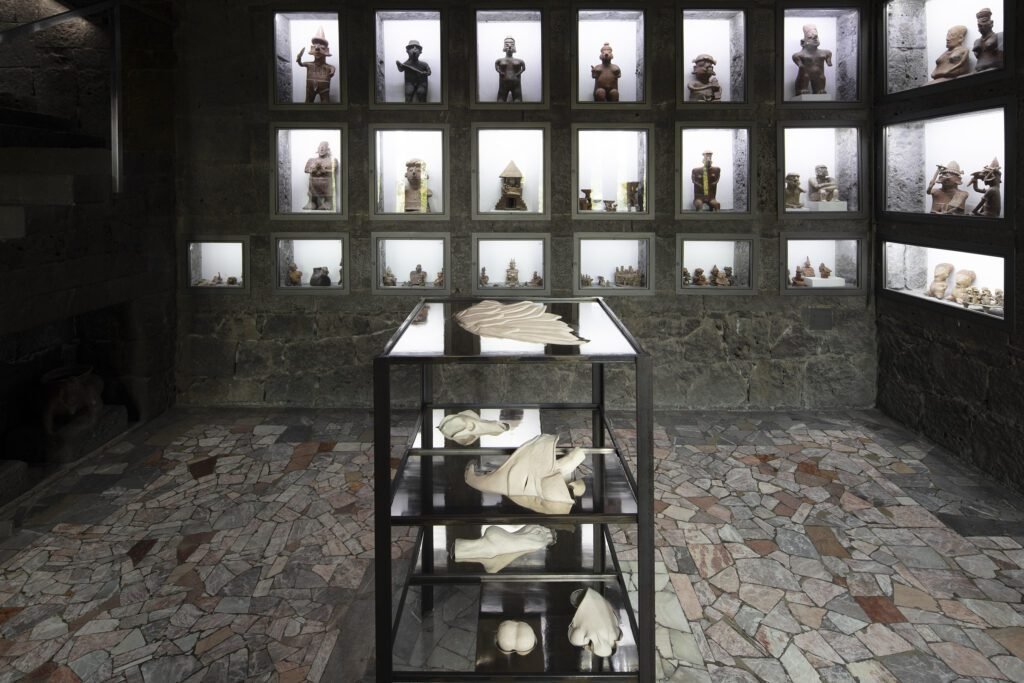
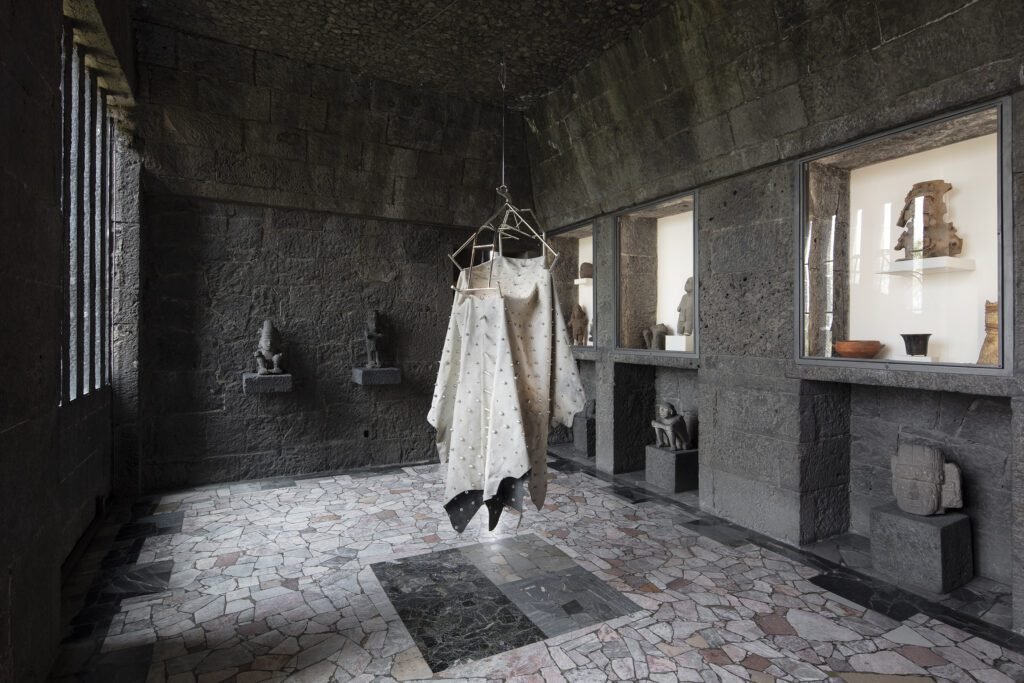
La muestra River Rouge se concentra en dos áreas del museo. En la sala principal se extienden siete esculturas de bronce sobre armazones de metal amarillo: garras, colas, uñas, escamas, convertidas en fetiches móviles. Mao reinscribe un imaginario industrial dentro del Anahuacalli como reliquias producto de la catástrofe metalúrgica. Acostumbrado a una escultura fragmentaria en que el cuerpo abraza los amarres del metal para seducir y sobrevivir, el artista celebra en esta sala —sin condolerse— el desastre que ha dejado en nuestros cuerpos el desarrollo industrial.
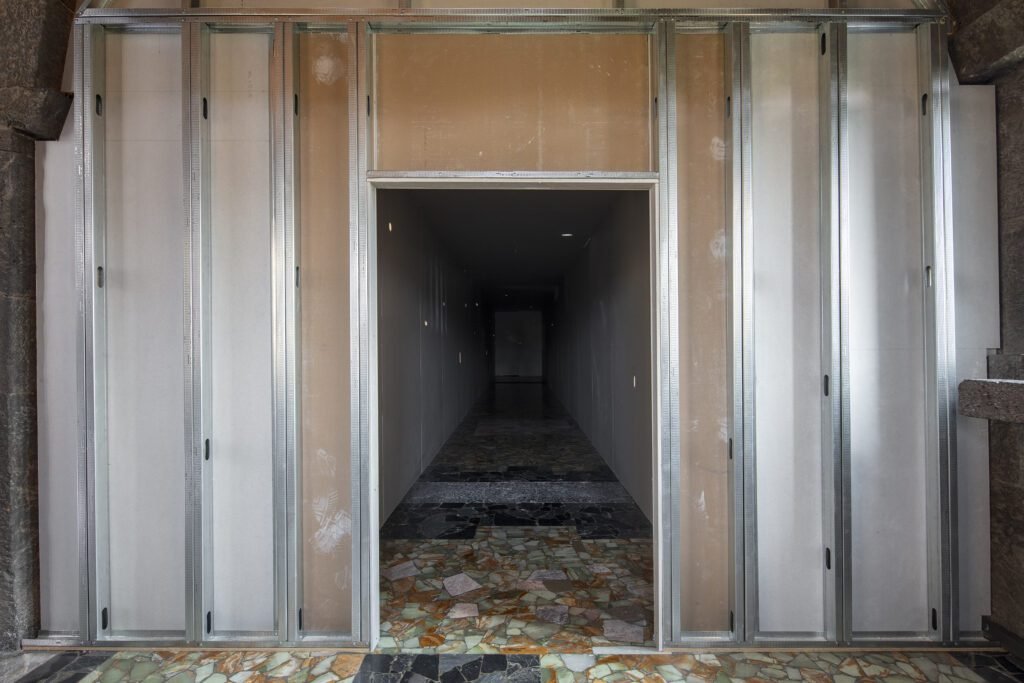
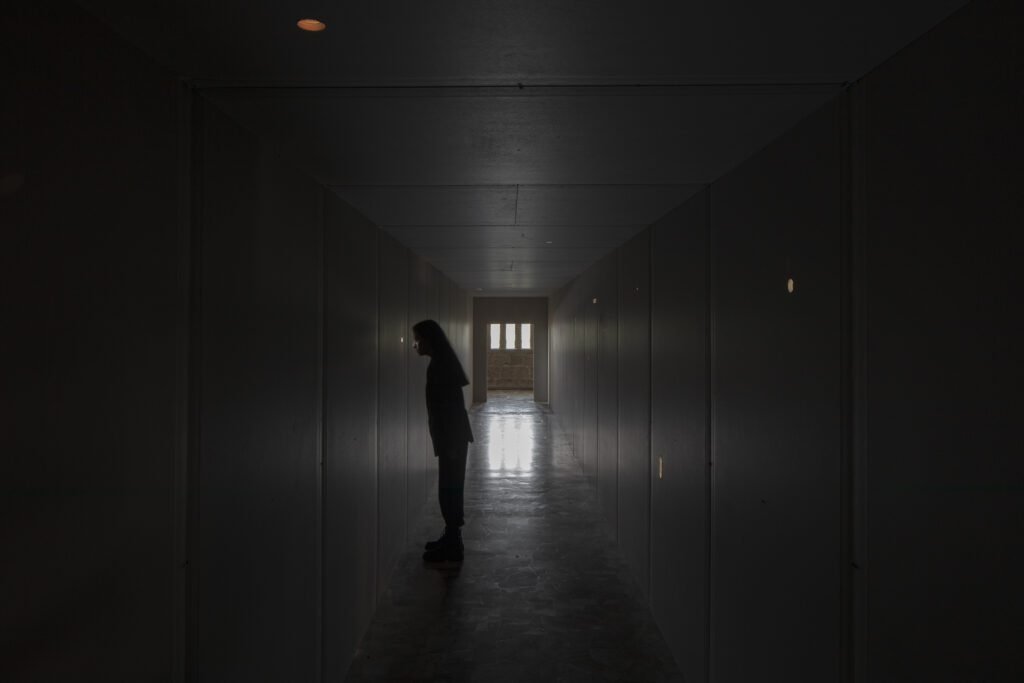
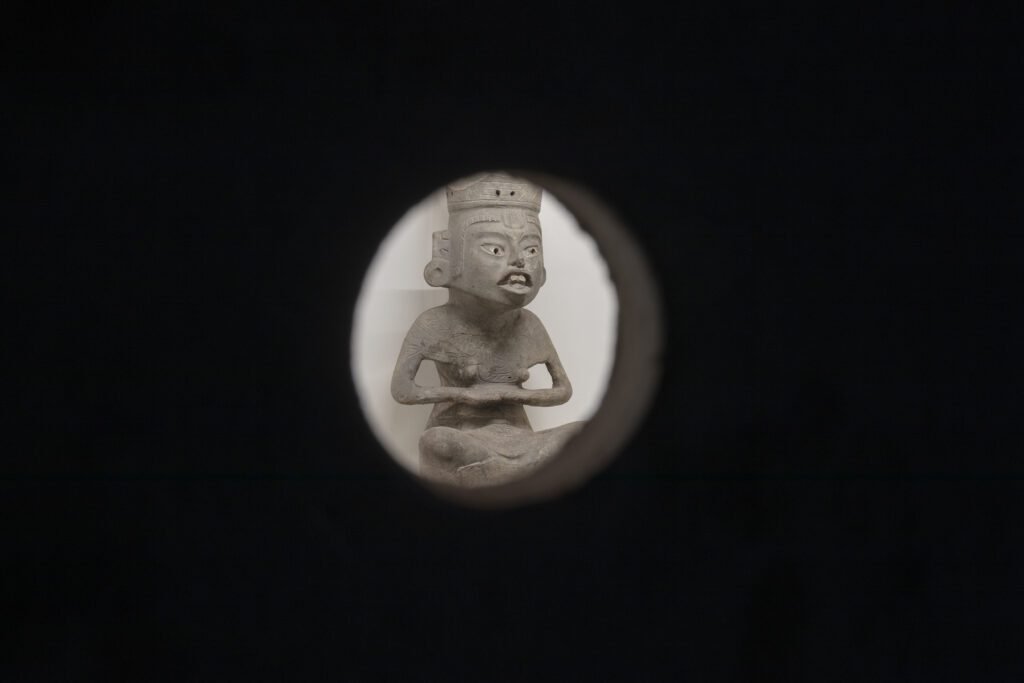
En la planta superior del museo se encuentra un túnel de tablaroca que obstaculiza la circulación del visitante. La estructura funciona como una restricción erótica, un sometimiento del espíritu al cuerpo, como una venda para agudizar las sensaciones del roce. La dignidad de la pirámide de piedra volcánica queda impedida por la visión de la piel artificial de la tablaroca, un recordatorio de que la carne en el presente puede ser una experiencia tan trascendental como aquella que se busca desde la raíz del espíritu.
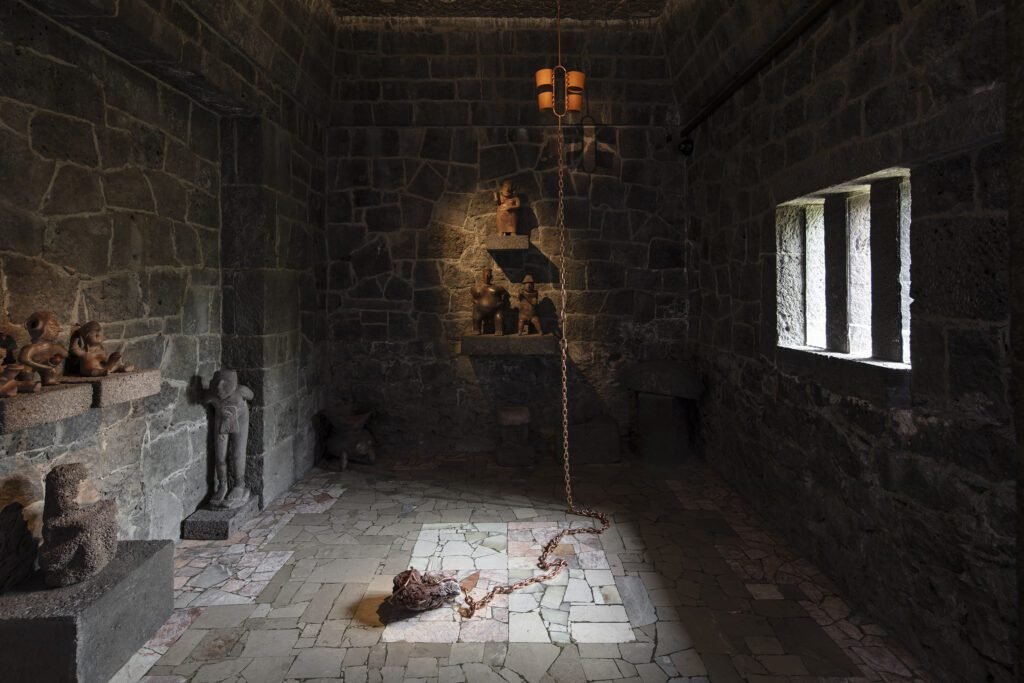
Si en el mito clásico el dios Prometo sufre encadenado por haberle dado a los seres humanos el fuego del progreso, en esta muestra las cadenas han sido rotas y están expuestas a lo largo de toda la planta del museo. Mao, al pensar otra velocidad que la del desarrollo técnico, convierte el Anahuacalli en un universo de seres mitológicos que abrazan la decadencia industrial como una burla sofisticada al optimismo del pasado. Este cosmos no necesita de dioses celosos del fuego, más bien invoca nuevas fuerzas para fundir arquitectura y piel, historia y materia, una metamorfosis más adecuada para nuestros tiempos.
—
Against the vision of history made of stone and clay preserved within the pyramid of the Anahuacalli, Yeni Mao proposes another experience of time—one that does not move at the pace of progress. Throughout the twentieth century, art was captivated by industrial development, by the labor movement as an engine of history, and by the past as a source of national identity. Mao, by contrast, presents a body of work grounded in a mythological imaginary, where the fragmented body emerges as a survivor of progress’s failed promise.
River Rouge takes its name from the heart of the U.S. automobile industry: Detroit, where Diego Rivera painted what are now known as the Detroit Industry Murals, commissioned by the Ford Motor Company in the 1930s. Commissioned to depict the industrial spectacle of the River Rouge factory, Rivera’s murals celebrate the power of labor and its revolutionary potential while presenting a syncretism between industry and pre-Hispanic mythology- a critique of progress that Mao uses as the trigger for his discourse.
Yeni Mao grew up with these murals in a city whose former brilliance has dimmed through successive recessions and decades of labor, racial, and social conflict. River Rouge establishes a dialogue between the Anahuacalli and Detroit, excavating the industrial fossils left behind by modernity’s optimism. Time, then, does not advance linearly and blithely toward utopia; rather, it is a monstrous surface.
The exhibition unfolds across two areas of the museum. In the main gallery, seven bronze sculptures extend across yellow metal armatures: claws, tails, nails, and scales transformed into mobile fetishes. Mao reinscribes an industrial imaginary within the Anahuacalli, presenting these forms as relics of a metallurgical catastrophe. Through a fragmentary sculptural language in which the body embraces metal’s constraints in order to seduce and survive, the artist celebrates, without commiseration, the devastation industrial development has left upon our bodies.
On the museum’s upper floor, a drywall tunnel obstructs the visitor’s passage. The structure functions as an erotic restraint, subordinating spirit to body, like a blindfold that heightens the sense of touch. The dignity of the pyramid’s volcanic stone is interrupted by drywall’s artificial skin, suggesting that the experience of flesh in the present can be as transcendent as the spiritual origins we seek in the past.
In classical myth, Prometheus is chained and punished for giving humanity the fire of progress. In River Rouge, those chains have been broken and lie exposed across the museum floor. By imagining a temporality distinct from that of technological development, Mao transforms the Anahuacalli into a universe of mythological beings that embrace industrial decline as a sophisticated provocation to the optimism of the past. This cosmos has no need for gods protective of fire. Instead, it summons new forces through which architecture and skin, history and matter, can fuse into a metamorphosis more attuned to our time.
Text by Jesús Torrivilla
Imágenes cortesía del Archivo Diego Rivera y Frida Kahlo, Banco de México, fiduciario en el Fideicomiso relativo a los Museos Diego Rivera y Frida Kahlo.
Fotográfo: Ramiro Chaves